
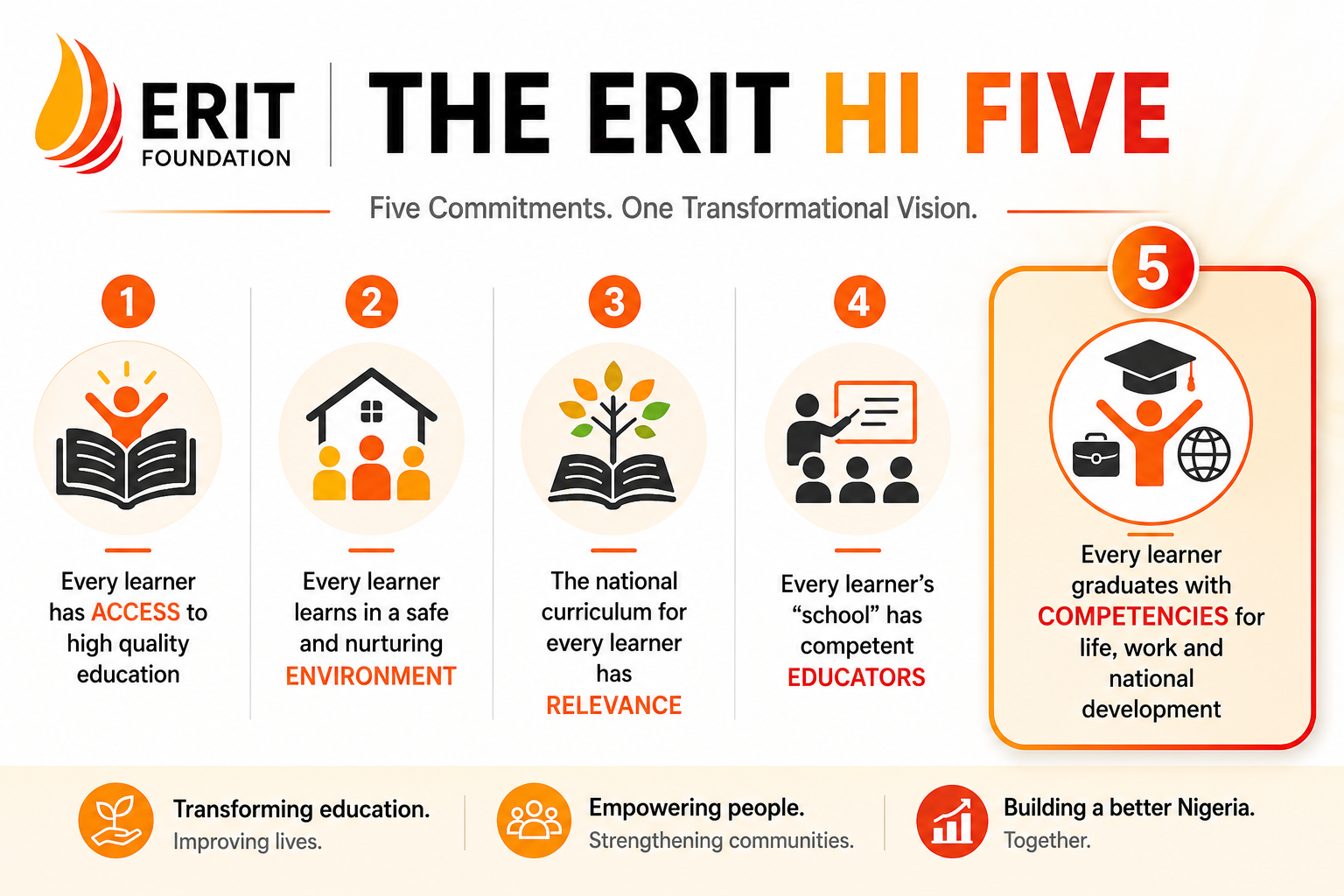
Rethinking what it means to graduate with competencies for life, work and national development.
For decades, the traditional university proposition has been relatively simple: study, graduate and get a job.
But what if universities could do more than prepare young people to enter the economy?
What if they could help young people create businesses, solve problems and build the economy?
The Masters’ Union, a business school in India, offers an intriguing model.
Students who have a startup idea receive entrepreneurial training, mentorship and financial support to pursue their venture while still having the security of completing a degree.
The university, in effect, helps provide both the education and the runway to take a serious shot at entrepreneurship.
The idea is simple but powerful.
A young person with a promising idea often faces a difficult choice: get a job and earn an income, or take the risk of building a business with no guarantee of survival.
The Masters’ Union model creates a third option.
Learn. Build. Test. Get support. And have enough financial runway to give the venture a genuine chance.
The student develops practical entrepreneurial skills, learns how to refine and test an idea, understands customers, builds a product and gains access to mentorship and networks.
If the venture fails, the student still has a degree and the competencies developed along the way.
If it succeeds, the student may have built a business capable of creating jobs and solving real problems.
The model recognises a fundamental reality of entrepreneurship: many potentially good businesses fail not because the idea is bad, but because the founder runs out of money before the idea has had enough time to mature.
It also recognises that entrepreneurship is not just about having ideas.
It requires skills, discipline, mentorship, experimentation, resilience and capital.
And this is where the idea becomes particularly interesting for Nigeria.
We are already seeing encouraging investments by Nigerian companies in university innovation and skills development.
Moniepoint’s ₦3 billion investment in innovation hubs across three federal universities is aimed at strengthening digital talent and equipping young Nigerians with practical competencies in areas including software engineering, AI, robotics, product development, data science, design and entrepreneurship.
UBA has established a Business Office and Innovation Hub at the University of Lagos, creating a stronger connection between academia, industry and entrepreneurship.
Veritas University has also invested ₦1.3 billion in a Skills and Innovation Hub designed to equip students with industry-relevant technology and enterprise competencies.
These are important investments.
But perhaps we should ask the next question.
What happens after a young person has acquired the skills?
An innovation hub creates the environment for creativity.
A venture fellowship or startup fund can take the next step: helping a young person turn creativity into a functioning enterprise and giving them enough runway to discover whether the idea can actually work.
The strongest model for Nigeria may therefore be a combination of both.
Imagine universities where young people can:
Learn practical and technical competencies.
Create solutions to real problems.
Test those solutions with real users.
Receive entrepreneurial training and mentorship.
Access seed funding or a modest founder stipend.
Build a business while completing their education.
This is precisely the kind of outcome we have in mind with the fifth of ERIT’s High Five:
Young people graduating with competencies for life, work and national development.
That means more than producing graduates who are qualified to apply for jobs.
It means producing young people who can identify problems, think critically, use technology, create solutions, work with others, build enterprises and contribute meaningfully to their communities and country.
And the opportunity is not limited to technology.
It could be agriculture, food production, manufacturing, education, healthcare, logistics, the creative economy or any other sector where young Nigerians see a problem worth solving.
The investor wins.
The university becomes more relevant.
The community benefits from new solutions and new businesses.
The young entrepreneur gets a genuine chance.
And the nation benefits from a growing pipeline of enterprises, jobs, innovation and productive economic activity.
The future of higher education may not be about choosing between a degree and a skill.
It may be about creating institutions where knowledge, skills, creativity, entrepreneurship and opportunity come together.
Universities should not only award certificates.
They should become fertile grounds for practical creativity.
They should help young people move from:
“I have an idea.”
to
“I have tested it.”
to
“I have built something that works.”
Perhaps, with the right partnerships between universities, companies, investors, government and philanthropic organisations, the next generation of Nigerian entrepreneurs will not have to choose between getting an education and pursuing their dreams.
They can do both.
That is what it means for young people to graduate with competencies for life, work and national development.
By Adeyemi Adedeji
CEO
On behalf of the Education Reform and Innovation Team
#Education #Entrepreneurship #Innovation #YouthDevelopment #HigherEducation #Skills #Nigeria #NationalDevelopment #ERIT #AbiaFIRST